

Salmon Numbers Reach 11-Year High in Dry Creek Watershed
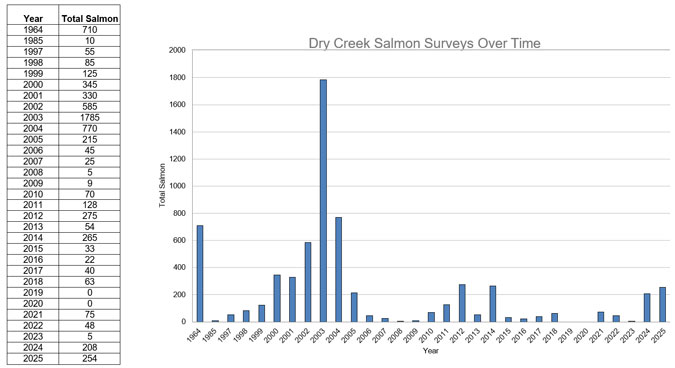
Roseville, Calif. – A recent survey of the Dry Creek watershed organized by the Dry Creek Conservancy recorded the highest number of spawning salmon seen in the area in more than a decade, offering encouraging signs for local waterways and restoration efforts.
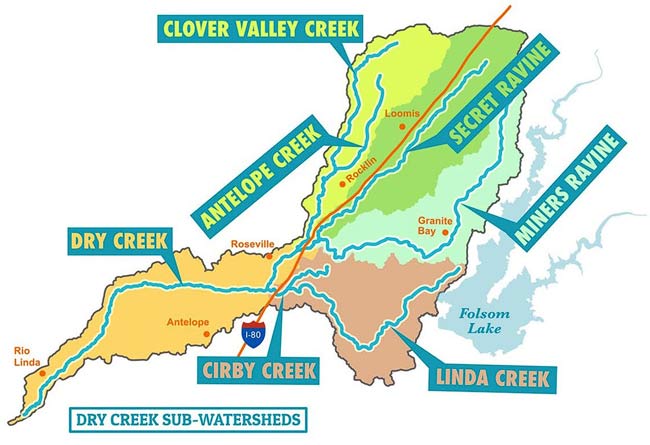
The Dry Creek Salmon Survey, conducted from Fall 2025 through Winter 2026, documented salmon activity in Dry Creek and its tributaries, including Secret Ravine, Miner's Ravine, Antelope Creek, and Linda Creek. The effort aimed to track population trends, assess spawning distribution, and raise public awareness about salmon conservation.
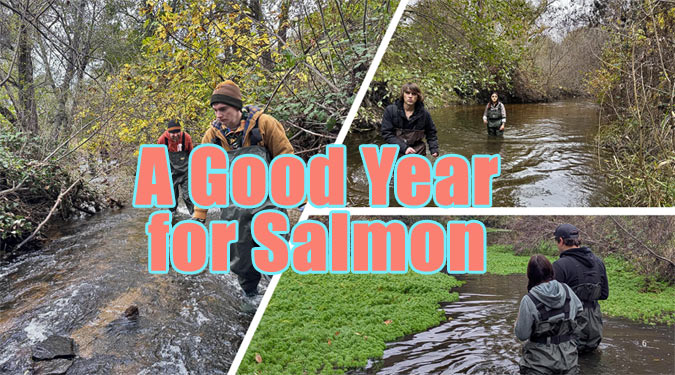
Volunteer survey teams waded one- to two-mile creek segments, visually counting live salmon, carcasses, and redds while taking care to avoid disturbing spawning habitat. Carcass data, including length, sex, and adipose fin presence, were recorded.
Strong Results Across the Watershed
Surveyors observed 254 salmon—167 live fish and 87 carcasses—between October 17, 2025, and January 19, 2026. Counts by waterway included 167 salmon in Secret Ravine, 41 in Miner's Ravine, 23 in Dry Creek, 14 in Linda Creek, and 9 in Antelope Creek.
A total of 72 volunteers surveyed more than 16 miles of creek, with the main survey taking place on November 29. Organizers noted that heavy rains canceled several planned surveys, suggesting actual numbers may have been higher.
Signs of Progress—and Caution
This year marked the highest salmon count since 2014, with notable observations including salmon reaching farther upstream in Miner's Ravine and the largest number seen in Linda Creek since 2004. Favorable rainfall, recent downstream barrier removals, a fishing moratorium on Chinook salmon, and strong volunteer participation likely contributed to the increase.
While the results are encouraging, salmon populations across the Sacramento Valley remain in long-term decline due to habitat loss, invasive species, and water diversions. Still, the Dry Creek survey highlights how restoration efforts and community involvement can support salmon recovery at the local level.