
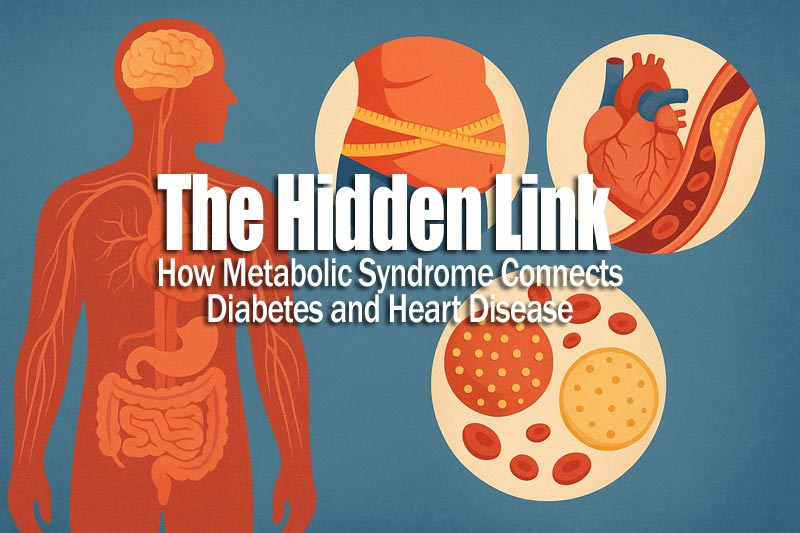

Insulin resistance and metabolic syndrome are at the heart of both type 2 diabetes and cardiovascular disease.
Sacramento, Calif. – Sacramento, Calif. – Dr. S.M. Grundy, MD, PhD, at the University of Texas Southwestern Medical Center, believes that "approximately one-third of an apparently healthy population is sufficiently insulin-resistant to be at increased risk of developing type 2 diabetes, cardiovascular disease, high blood pressure, polycystic ovary disease, nonalcoholic liver disease, and other conditions."
He states that focusing on metabolic syndrome will have the greatest impact on reducing the risk of cardiovascular disease.
Metabolic Syndrome
Metabolic syndrome is usually defined as a waist circumference greater than 35 inches for women and 40 inches for men; fasting glucose above 100 mg/dL; blood pressure over 130/85 mmHg; triglycerides above 150 mg/dL; and HDL cholesterol below 50 mg/dL for women and below 40 mg/dL for men. Often, proinflammatory and prothrombotic factors are also considered, measured as elevated hs-CRP and fibrinogen, respectively.
To recognize the presence of metabolic syndrome and dysfunctional insulin signaling-before organ damage occurs and a definitive disease develops-Dr. Jeff Bland, PhD, FACN, FACB, suggests that the best early-stage marker associated with insulin resistance is the shift in apolipoprotein B and apolipoprotein A-I levels in the serum.
"Lousy Cholesterol"
Apolipoprotein B is the primary apolipoprotein of low-density lipoproteins (LDL, or "lousy cholesterol"), which carry cholesterol to tissues. Apolipoprotein A-I is the major protein component of high-density lipoproteins (HDL, or "good cholesterol") in plasma, which promotes cholesterol excretion from the body via the liver. These lipoproteins are influenced not only by genetics but also by diet, lifestyle, and environmental factors.
It has been well documented that an elevated apolipoprotein B to apolipoprotein A-I ratio is an important determinant of cardiovascular disease risk-independent of total serum cholesterol levels.
Dr. Bland suggests that the Apo B/Apo A-I ratio may be the most useful summary index of cardiovascular risk, being more informative than conventional LDL cholesterol measurements or other lipid ratios. An additional advantage of the Apo B/Apo A-I ratio is that it can be determined from non-fasting blood samples, unlike most other cholesterol tests.
The lower the ratio, the lower the risk. A ratio of 0.7 or lower is considered low risk, whereas a ratio of 0.8 or higher indicates increased risk.
More importantly, the Apo B/Apo A-I ratio is a very sensitive indicator of changes in insulin signaling and provides an early warning of metabolic syndrome-related risk, which often precedes the development of heart disease and type 2 diabetes.

Explore additional topics from Sacramento Naturopathic Medical Center with Dr. Godby, ND, MA and his team at Natural Wellness.
As a naturopathic doctor for the last 20 years, I have witnessed the power of a preventative lifestyle and naturopathic medicine to transform the health and lives of thousands of patients.
Sacramento Naturopathic
2530 J Street, Suite 100
Sacramento, CA 95816
Phone: (916) 446-2591
sac-nd.com/dr-dennis-godby-nd-ma