

Folsom Fire Department Adjusts Operations to Ensure Fiscal Sustainability
Folsom, Calif. – The Folsom Fire Department is implementing a plan to realign staffing and equipment to reduce overtime costs and ensure fiscal sustainability.
Effective this week, one fire engine will be placed out of service, and personnel will be reassigned to ensure coverage aligns with community risk levels and call volumes, resulting in an estimated cost savings of $1 million annually.
Reassignment
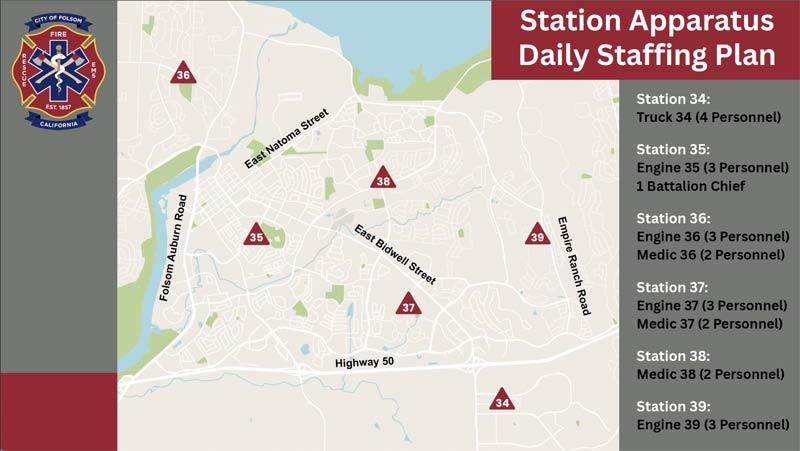
Apparatus and staffing are being reassigned to best meet community needs. The plan eliminates one engine company at Station 38 while ensuring all six fire stations remain open. Four engine companies, one ladder truck, and three ambulances will remain in service.
This plan is part of a broader citywide effort to carefully manage financial resources while continuing to provide essential services to the community. Following a series of public meetings, the Folsom City Council this fall approved budget reductions to address the city's General Fund shortfall for Fiscal Year 2025-26.
he multi-stage process included staff reductions and service reorganizations, developed with input from the community.
Impact
Some response times may be affected during periods of high call volume or simultaneous incidents, and the department will monitor and adjust operations as needed to minimize impacts. The Folsom Fire Department is also coordinating with the Sacramento Regional Fire/EMS Communications Center to update dispatch systems to reflect new apparatus assignments and ensure seamless implementation.
"The Folsom Fire Department remains focused on providing fast, effective emergency response for our community," said Interim Folsom Fire Chief Jason Solak. "This realignment allows us to operate as efficiently as possible given the necessary staffing reductions. These changes enable us to deploy resources where they're needed most while keeping public safety at the forefront of every decision."
The department continually evaluates its operations to maintain effective, responsive, and fiscally responsible services. By prioritizing high-risk areas and optimizing available resources, the department will continue to deliver dependable service under current fiscal constraints.